
Magnets to Motors
From Magnets to Motors, Adams Delivers High-Performance Solutions for Motors, Generators, and Actuators
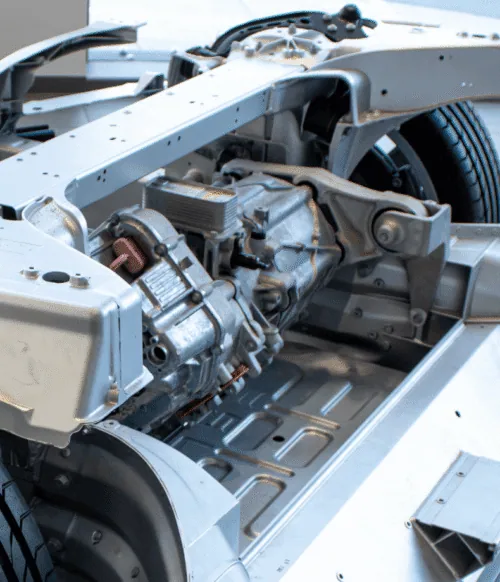
Magnet Materials for Electric Motors and Other High-Performance Applications
Adams Magnetic Products provides advanced magnet solutions for motors, generators, and actuators, using rare earth magnets (Samarium Cobalt and Neodymium) and ferrite (ceramic) magnets.
Rare earth magnets, being two to three times stronger than ferrite magnets, deliver superior performance in smaller, lighter motors, making them ideal for high-performance applications.
Samarium Cobalt magnets are optimal for high-temperature applications due to their exceptional temperature and corrosion resistance, while electric vehicle motors favor Neodymium magnets because of their high magnetic strength.
Ferrite magnets, known for their cost-effectiveness and excellent corrosion resistance, are widely used in DC electric motors.
Magnet Advantages
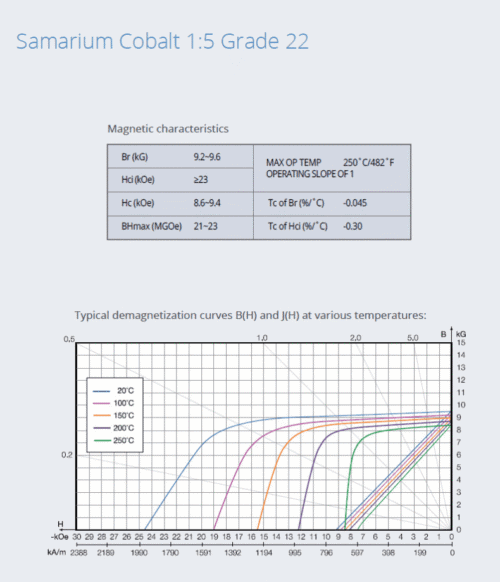
Samarium Cobalt
Corrosion resistance
Temperature stability
A Samarium Cobalt magnet can withstand higher temperatures than a Neodymium magnet.
The maximum operating temperatures for Samarium Cobalt magnets are between 250 and 550°C; Curie temperatures range from 700 to 800°C.
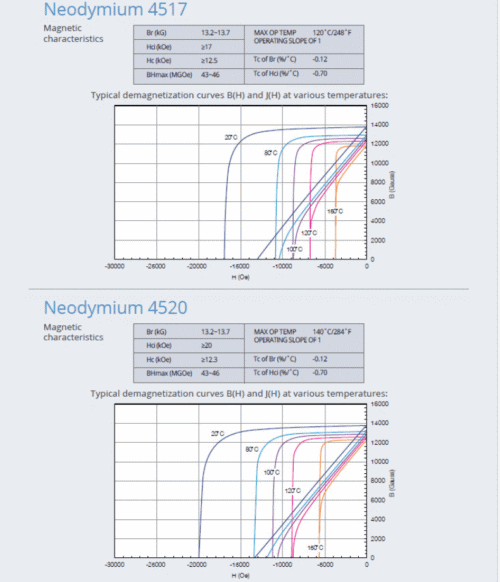
Neodymium
Corrosion
Neodymium magnets are vulnerable to corrosion, especially along grain boundaries of a sintered magnet. This type of corrosion can cause serious deterioration, including the crumbling of a magnet into a powder of small magnetic particles.
This vulnerability is addressed by adding a protective coating to prevent exposure to the atmosphere.
Nickel plating or two-layered copper-nickel plating are the standard options in motor applications, with additional metal, polymer, and lacquer coatings also available.
Operating temperature
A low coercivity grade Neodymium magnet may begin to lose strength if heated above 176°F (80°C). High coercivity grade Neodymium magnets have been developed to function at temperatures up to 428°F (220°C) with little irreversible loss.
The need for a low temperature coefficient in neodymium magnets and motor applications has triggered several grades to be developed to meet specific operating requirements.
Please refer to our chart of magnetic properties to compare the characteristics of each grade.
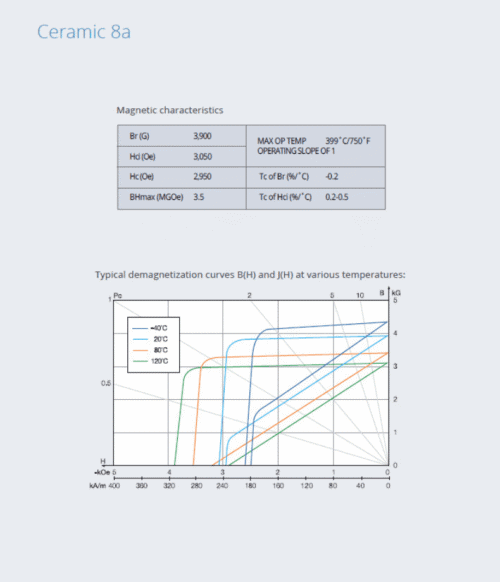
Ferrite or Ceramic
Corrosion
Operating temperature
The maximum operating temperature for a ceramic magnet is 250°C. Although you will experience magnetic losses when operating at elevated temperatures, the losses are recovered when the material is brought down to normal ambient temperature.
However, operating in very cold temperatures (-20°C) can result in permanent losses of magnetic strength unless the circuit has been designed for such extremes. This is an important consideration in magnets to motor applications.
Magnet Applications
Let Adams help choose the magnet to best suit your specific sensor application requirements.
We have experience designing around the effect of environmental conditions, temperature, shock, vibration, corrosion resistance, magnetic stability, manufacturability, and form factor (and more!) related to the use of magnets with sensors and can help optimize the performance of your application.
Hall Effect Sensors
Magnetic Hall Effect Sensors are popular for their versatility in sensing position, velocity, and/or direction. Offering non-contact and wear-free operation, they are low maintenance – basically a “set it and forget it” operation.
Guitar Pickups
Adams Magnetic Products supports the music industry every day with high-quality alnico and ceramic magnets for every style of pickup made. Select from our stock sizes or have parts produced to your exact specifications.
Package Enclosures
Interested in Learning More?
Adams is ready to be a part of your magnetic products with off-the-shelf and custom applications. Contact us to find out more.
Frequently Asked Questions
What types of magnets are used in electric motor applications?
Electric motors commonly use permanent magnets, including neodymium (NdFeB), samarium cobalt (SmCo), and ferrite magnets. Neodymium and samarium cobalt magnets are preferred for high-performance motors due to their high magnetic energy and efficiency, while ferrite magnets are used in cost-sensitive designs.
How do I choose between neodymium and samarium cobalt magnets for a motor?
Neodymium magnets provide higher magnetic strength and compact motor design, making them ideal for high-efficiency and high-torque motors. Samarium cobalt magnets are better suited for high-temperature, high-speed, or corrosive environments where long-term magnetic stability is critical.
What temperature limits should be considered for motor magnets?
Motor magnets must be selected based on maximum operating temperature. In motor applications, neodymium magnets typically operate up to 150°C, while samarium cobalt magnets can withstand temperatures up to 300°C. Exceeding these limits can result in irreversible demagnetization.
How do permanent magnets affect motor torque and efficiency?
Magnet strength, stability, and geometry directly influence torque output, power density, and motor efficiency. Proper magnet selection reduces current requirements, improves efficiency, and enables smaller, lighter motor designs.
What causes demagnetization in motor magnets?
Demagnetization can occur due to excessive heat, opposing magnetic fields, mechanical stress, or improper magnet grade selection. High-speed motors and applications with frequent load changes require magnets designed to resist these conditions.
What tolerances are required for magnets used in motor assemblies?
Motor magnets often require tight dimensional and magnetic tolerances to maintain consistent air gaps and balanced magnetic fields. Precision grinding, sorting, and controlled magnetization are commonly used to meet motor performance requirements.
Do neodymium magnets used in motors require coatings?
Yes. Neodymium magnets typically require protective coatings such as nickel, epoxy, or specialty coatings to prevent corrosion. Coating selection depends on operating environment, temperature, and assembly method.
Can motor magnets be custom-shaped or magnetized?
Motor magnets are frequently custom-shaped, including arc segments, trapezoids, and multi-pole designs, to optimize flux density and reduce cogging torque. Custom magnetization patterns can further improve motor performance and efficiency.
How does rare earth magnet supply affect motor production?
Rare earth magnets can be affected by material availability, pricing volatility, and lead times. Early material selection, alternate grade evaluation, and inventory planning can help reduce supply chain risk in motor production.
How early should magnets be specified in motor design?
Magnets should be specified early in the motor design process. Early involvement allows for material optimization, thermal analysis, tolerance alignment, and cost control before designs are locked.
Can Adams Magnetic provide engineering support for motor magnet design?
Yes. Adams Magnetic supports motor designers with material selection, grade optimization, temperature analysis, custom magnet geometry, and supply planning. Engineering support is available from concept and prototyping through full production.
Can Adams provide stock or custom magnets for motors?
Yes. We offer stock sizes and can also fabricate custom magnets when a motor design requires specific grades, shapes, or coatings.