
Guitar Pickup Magnets
Enhance Your Guitar's Sound with Top-Quality Magnets
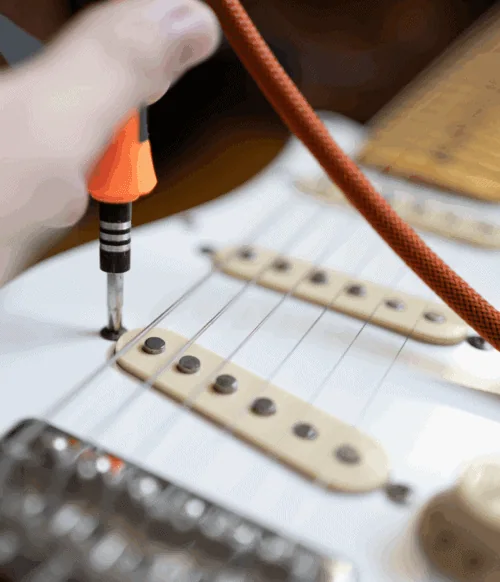
What Are Guitar Pickups?
One of our favorite applications at Adams Magnetic Products is magnets for guitar pickups. There are many things to consider if you’re looking to optimize your guitar to its full potential, and guitar magnet pickups are arguably one of the most important elements of customization.
If you’re a skilled designer of pickups looking to create the best sound from your instrument, you have a choice between Alnico and ceramic magnets when it comes to magnetic guitar pickups.
We’re a company of music lovers, and we support the music industry every day by supplying high-quality Alnico and ceramic magnets for every style of magnetic pickup made. Select from our stock sizes, or we can produce to your exact specifications.
The Basics
Before we dive into the details, let’s answer the casual surfer here by answering: what is a guitar pickup magnet even made of?
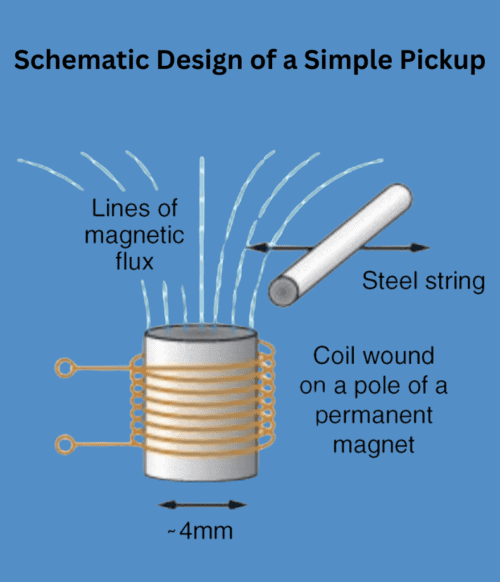
Basically, pickups, ceramic or Alnico, consist of magnets and wires. However, the way in which these components work together is rather complicated.
A length of wire is first coiled around the magnet, which creates a magnetic field. Whenever a string vibrates in that field, the coil detects field changes and then creates a voltage, thus producing that perfect sound.
As far as the resources that go into making the magnets for guitar pickups, that’s where Adams steps in.

Probably the biggest variables that influence the decision between Alnico and ceramic magnets for guitar pickups are their specific uses or effects sought within the realm of pickups.
Let’s start with Alnico. They are known to be very strong and durable, which is what many pickup manufacturers love about them. Because of this, they’re also used for things such as loudspeakers and motors.
But any seasoned musician will argue that its best purpose is served when planted into the pickup of your guitar.
These durable guitar pickup magnets are known for a smooth, melodic sound when it comes to the tone of the instrument and are different from the sound of the circuit created with ceramic magnets for pickups.
The Details

Alnico magnets for guitar pickups come in three main grades: 2, 3, and 5.
- Alnico 2 traces back to the days of the 1950 Telecasters. This class seems to work well for middle-position pickups. It is known for its sweet, vintage tone, and there seem to be few disadvantages to using it.
- Alnico 3 is the weakest of the three grades. It contains less cobalt, a core ingredient in the rest of the Alnico family. Because of the decrease in magnetic pull, it works wonders for neck pickups, where there is the most string vibration.
- Alnico 5 is the strongest of the three Alnico grades of these guitar magnet pickups. The tone and response of the magnet are more powerful than its two cousins. This makes it perfect for bridge pickups, where there is the least vibration. If you want an aggressive, in-your-face kind of sound, Alnico 5 is your best bet among magnetic pickups.

Alnico may be the most popular, but ceramic magnets for guitar pickups are also an option to consider. As mentioned earlier, it has a harsher edge than Alnico. The two have a noticeably different sound, albeit both are very good. And ceramic magnets for pickups are less expensive, making them attractive to use in manufacturing budgets or entry-level pickups.

Neodymium (Rare Earth) Magnets for Guitar & Bass Pickups
Neodymium – often called “neo” – is the highest-energy permanent magnet material used in guitar pickups today. While classic pickup recipes rely on Alnico or ceramic, neodymium gives designers more output, wider sensing options, and compact form factors. Adams supplies licensed neodymium magnets in stock and custom shapes, including neodymium disc, ring, and block shapes, with engineering support to tune tone, output, and feel for your instrument.
Why Choose Neodymium?
- Very high energy density: Strong magnetic fields from small magnets enable compact or multi‑coil designs and consistent string response across the field.
- Higher output potential: Useful for modern high‑gain or extended‑range instruments; also allows lower coil winds for clear, low‑noise pickups.
- Articulate tonal profile: Fast attack, extended highs, and tight lows; maintains clarity in complex chords and drop tunings.
Sound & Setup Notes
- Expect a more immediate, “hi‑fi” presentation compared with Alnico guitar pickup magnets. If you prefer vintage compression or “sag,” we can help you shape that with steel pole pieces, blades, and winding choices.
- Start with a lower pickup height than Alnico to avoid magnetic pull artifacts; raise gradually to taste.
- Excellent for active pickups and for bass (including 5/6‑string) where consistent low‑string definition matters.
When Neodymium Makes Sense
- Modern high‑output magnets for guitar or bass pickups
- Compact housings, rails/blades, or wide‑aperture sensing
- Low‑wind designs targeting high clarity and low noise
- Instruments that need balanced response under heavy effects or down‑tuning
Design Considerations We Can Help With
- Grades & temperature: Common grades (e.g., N35–N52). Standard neo is suitable for typical pickup environments; higher‑temp grades are available for elevated thermal margins.
- Coatings & corrosion: Nickel‑copper‑nickel is common; epoxy and other finishes are available for added protection.
- Geometry & magnetization: Bars, rods, discs, rings, and custom blades. Axial or through‑thickness magnetization depending on pole layout.
- Field shaping: Pair neo with steel pole pieces or blade rails to control string‑to‑string balance and feel.
Neo vs. Alnico vs. Ceramic (at a glance)
- Neodymium: Highest energy; bright/clear, immediate attack; set lower to reduce pull.
- Alnico (II/III/V): Classic, musical compression and warmth; widely used for vintage and “open” tones.
- Ceramic (ferrite): Cost‑effective guitar pickup magnets, tight low end and crisp highs; can feel more aggressive.
Also Consider Samarium Cobalt (SmCo)
When corrosion resistance or elevated temperatures are critical, Samarium Cobalt provides excellent stability with a slightly smoother top‑end than neo – another good option for certain boutique designs.
Visit our Rare Earth Magnet Resource Library for more information.
How Adams Supports Pickup Makers
- Licensed neodymium supply with full lot traceability
- Custom machining & magnetization to your print
- Application engineering for tone goals, coil/wire tradeoffs, pole layouts, and pickup height targets
- Quick‑turn prototyping and scalable production
Get Started
Tell us your target output, tonal goals, form factor, and mounting method. We’ll recommend a material/grade, shape, and magnetization pattern for your magnets for guitar pickups – and ship samples or production parts fast.
Magnet Applications
Let Adams help you choose the magnetic products to best suit your specific sensor application requirements. We have experience designing around the effect of environmental conditions, temperature, shock, vibration, corrosion resistance, magnetic stability, manufacturability, form factor (and more!) related to the use of magnets with sensors and can help optimize the performance of your application.
Hall Effect Sensors
Magnetic Hall effect sensors are popular for their versatility in sensing position, velocity, and/or direction. Offering non-contact and wear-free operation, they are low maintenance, essentially a “set it and forget it” operation.
Motors
Magnets and assemblies from Adams Magnetic Products can be found in many types of motors, generators, and actuators, not just guitar magnet pickups.
Package Enclosures
Magnetic packaging closures offer unique solutions for creative ingenuity while providing features such as easy-to-open devices and strong repeat closure technologies.
Interested in Learning More?
Adams is ready to be a part of your products with off-the-shelf and custom applications for magnets for guitar pickups and much, much more.